IoT (the “Internet of Things”): Is It a Connection to Danger?

 
When people talk about “The Internet of Things,” do you get excited and put your geek on, or do your eyes glaze over and you suddenly wish you were at the dentist?

The Internet of Things (IoT) has become a buzzword phrase that “people in the know” throw around and expect the rest of us to understand, even though it’s actually one of the vaguest terms out there.

Sure, we’ve all heard of (and probably talked to) Alexa, Siri, and Cortana…but is that what it is?

What’s the Internet of Things really about?

IoT is the idea of connecting any device to the internet. and/or to each other. and having those devices respond to situations based on the data it has collected and processed.

Just about any object can be transformed into an IoT device, if it can be connected to the internet and controlled that way.

IoT is essentially a move to the “Smart World,” where everything is connected, monitored, and manipulated by even smarter software.

This may all sound like science fiction, but truth is we’re all living right smack in the middle of it:

  • Smart thermostats in houses and offices that allow people to monitor temperature from a laptop or smartphone
  • Smart cars that capture data on the engine and record your comings and goings
  • Smart lighting systems that can be operated by sensors and monitored remotely
  • Smart refrigerators that can tell owners what food items are running low or going bad
  • Smart speakers, like Amazon’s Echo and Google Home, that make it easier to play music, set timers or get information.

The Internet of Things is big and it’s only going to get bigger – there are more connected things now than there are people in the world.  Gartner.com, a global research firm, calculates that there were about 8.4 billion IoT devices used in 2017, with more than half being consumer products like smart TVs and speakers.

Gartner also predicts IoT devices will go over 26 billion, with IoT overall spend hitting $3 trillion by the year 2020.

At an even bigger scale, smart cities projects are filling entire regions with sensors to help us understand and control the environment.

But just because anything can be connected doesn’t mean you should connect them all.

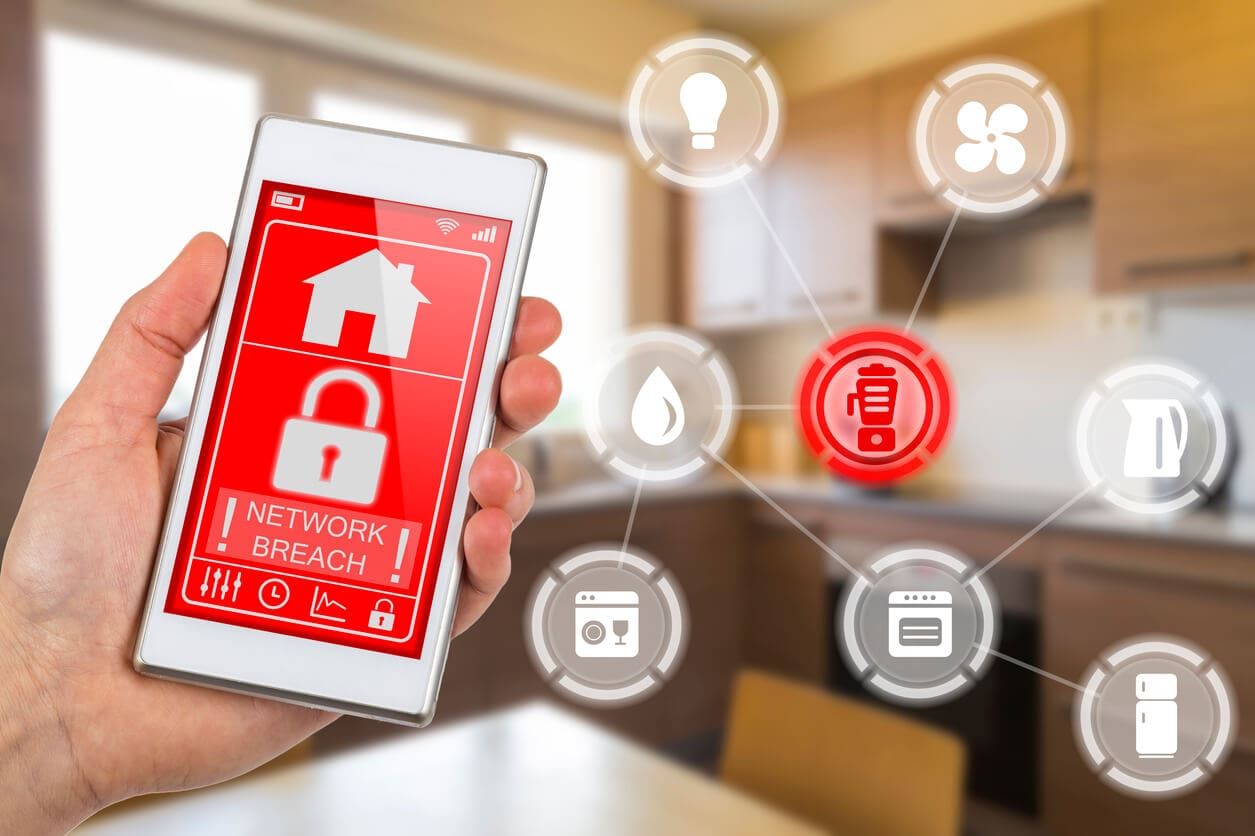
IoT bridges the gap between the virtual and physical world, which means that hacking into devices can have dangerous real-world consequences…and unfortunately, security is currently one of its biggest issues.

A lot of IoT devices out there don’t have basic data encryption, and because these devices lack the capability to be patched, they might be a permanent risk.  Hackers are well aware of this and are now actively targeting IoT devices.

You listening, moms and dads?

A couple in Washington was shocked to discover that a hacker had broken into their home network and was talking to their toddler through the baby monitor. The mother discovered it herself when she walked into the room and heard a strange voice, the hacker’s own voice, talking to her child. The hacker had also commandeered the camera and was controlling it remotely, from wherever he was.

There was no way to identify who it was.

An article in The Wall Street Journal about smart-device security said, “If hackers can commandeer a baby monitor, you know the Internet of Things needs to wake up to threats.”

Even Samsung’s Open Economy document says “there is a very clear danger that technology is running ahead of the game.”

It has a lot of people worried that money-seeking hackers can worm their way into networks through smart devices to extract financial information; that terrorists may try to hack into government-connected utilities and infrastructure to disrupt our regular routines, or worse; and that hackers in other countries (working for other governments) may expand their spying efforts by breaking into government or corporate networks.

Companies making these smart devices need to focus more on security issues to protect their customers and less on being first in the marketplace or getting a top review on CNET.com.

What can you do? 

First, you should decide how fast you want to jump into our highly connected world and if you want to bring more smart devices into your home.

Should you, for example…buy that new Samsung 4-door refrigerator with Family Hub Wi-Fi LCD touchscreen and built-in cameras—the one that lets you peek inside while you’re at the grocery store?

Or should you instead wait until manufacturers, security companies and government regulators come up with an integrated game plan to keep hackers out of our non-phone smart devices?

Remember that you never know who is watching or listening – perhaps you should talk it over with the family at dinner.

Just hope that an eavesdropping hacker doesn’t speak-up about the idea.

Picture of <span>About The Author</span>Chris Parker

About The AuthorChris Parker

Chris Parker is the founder of WhatIsMyIPAddress.com, one of the world’s most popular websites for online privacy and security with over 13 million monthly visitors. He is also the host of the Easy Prey podcast, where he interviews experts and survivors to uncover the tactics behind scams, fraud, and digital manipulation. Chris is the author of Privacy Crisis: How to Maintain Your Privacy Without Becoming a Hermit, a practical guide to protecting personal information in today’s surveillance-driven world. His work has been featured on ABC News and numerous podcasts, making him a trusted voice on how to stay safe, secure, and private online.
Share Post:

INSIGHTS YOU

MAY ALSO LIKE

You play a role in preventing social engineering. So, just what is social engineering? It’s a vague term that’s used for online shenanigans and…

If you think that only your Internet Service Provider (ISP), such as Cox Cable or Verizon, knows your IP address, think again. (Your IP…

This post was moved over from an old blog of mine that I’ve since taken down. Several years ago I purchased an APC AP9630…

WHAT PEOPLE SAY

ABOUT CHRIS

DOWNLOAD CHRIS’ BOOK

PRIVACY CRISIS

DOWNLOAD YOUR FREE PDF, MP3, and workbook by entering your details below.

We respect your privacy. 

Don’t want to share your email?

Privacy Policy

This following document sets forth the Privacy Policy for this website.

Collection of your personal information

We collect Non-Personally Identifiable Information from visitors to this Website. Non-Personally Identifiable Information is information that cannot by itself be used to identify a particular person or entity, and may include your IP host address, pages viewed, browser type, Internet browsing and usage habits, advertisements that you click on, Internet Service Provider, domain name, the time/date of your visit to this Website, the referring URL and your computer’s operating system.

Free offers & opt-ins

Participation in providing your email address in return for an offer from this site is completely voluntary and the user therefore has a choice whether or not to disclose your information. You may unsubscribe at any time so that you will not receive future emails.

Sharing of your personal information

Your personal information that we collect as a result of you purchasing our products & services, will NOT be shared with any third party, nor will it be used for unsolicited email marketing or spam. We may send you occasional marketing material in relation to our design services.

What Information Do We Collect?

If you choose to correspond with us through email, we may retain the content of your email messages together with your email address and our responses.

Cookie Based Marketing

Some of our advertising campaigns may track users across different websites for the purpose of displaying advertising. We do not know which specific website are used in these campaigns, but you should assume tracking occurs, and if this is an issue you should turn-off third party cookies in your web browser.

How Do We Use Information We Collect from Cookies?

As you visit and browse Our Website, the Our Website uses cookies to differentiate you from other users. In some cases, we also use cookies to prevent you from having to log in more than is necessary for security. Cookies, in conjunction with our web server log files or pixels, allow us to calculate the aggregate number of people visiting Our Website and which parts of the site are most popular.

This helps us gather feedback to constantly improve Our Website and better serve our clients. Cookies and pixels do not allow us to gather any personal information about you and we do not intentionally store any personal information that your browser provided to us in your cookies.

IP Addresses

P addresses are used by your computer every time you are connected to the Internet. Your IP address is a number that is used by computers on the network to identify your computer. IP addresses are automatically collected by our web server as part of demographic and profile data known as traffic data so that data (such as the Web pages you request) can be sent to you.

Sharing and Selling Information

We do not share, sell, lend or lease any of the information that uniquely identify a subscriber (such as email addresses or personal details) with anyone except to the extent it is necessary to process transactions or provide Services that you have requested.

How Can You Access and Correct Your Information?

You may request access to all your personally identifiable information that we collect online and maintain in our database by using our contact page form.

Changes to this Privacy Policy

We reserve the right to make amendments to this Privacy Policy at any time. If you have objections to the Privacy Policy, you should not access or use this website. You may contact us at any time with regards to this privacy policy.