Technology advances so rapidly, that it’s difficult for us to keep up with every new tech product introduced to make our lives easier. As we integrate these advances into our daily lives, is our cybersecurity protected? Can we trust that our internet providers won’t violate our privacy or overcharge us?
The Federal Communications Commission (FCC) continues to set new guidelines and labeling requirements for technology, protect consumer rights, and prevent bad online actors from taking advantage of loopholes to commit fraud.
The newest FCC legislation, the broadband nutrition label, became law in 2022 and as of April 2024, is required for all broadband providers. Let’s take a closer look at broadband nutrition labels and FCC labeling requirements to help you understand your consumer rights and how these labels can impact you.
What you need to know about FCC broadband nutrition labels
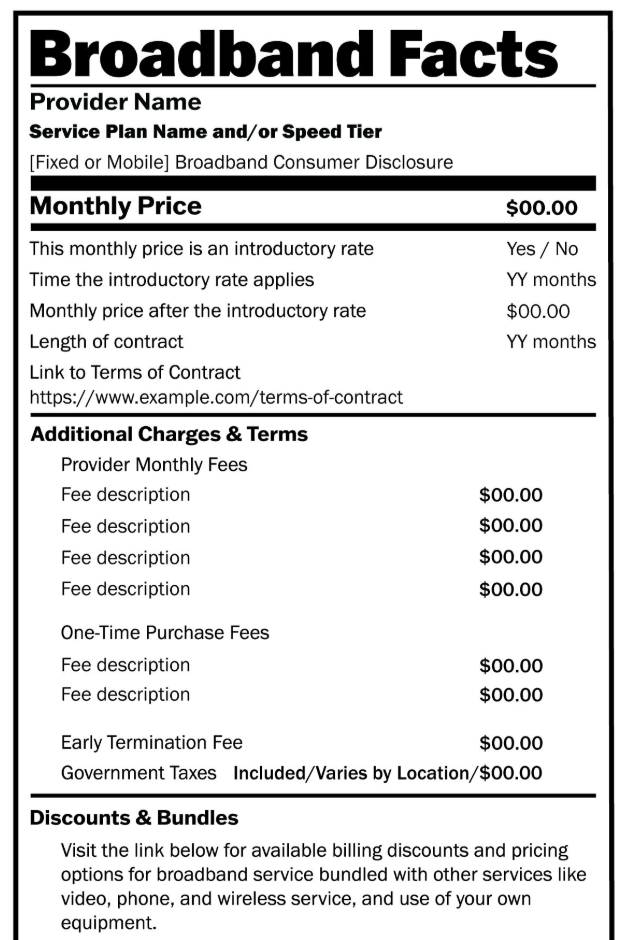
A FCC broadband nutrition label is a recent requirement for internet service providers (ISPs) to clearly display information about their services on their websites, devices, and any other space where accessible information is necessary.
Think of a broadcast nutrition label like a food label: It should transparently display all of the “ingredients” an ISP uses so that you can make an informed decision about what choices you should make. The FCC broadband label is actually modeled after the Food and Drug Administration’s (FDA) food labels, and lists ISP services in a similar way.
When you’re hesitant about purchasing a food item, turn over the package to read the ingredients, and find that the food contains mostly processed sugar and unpronounceable chemical compounds, you might decline to buy it. The same is true for ISPs — you should know what you’re getting before blindly paying for their services.
How broadband nutrition labels impact consumers
Broadband nutrition labels inform the public and help consumers to make smart choices about which ISP they choose. Recent FCC labeling requirements ensure that a broadband nutrition label is available at the point of sale and provides clear, accessible information for consumers about the following:
- Additional Fees (like installation and equipment rental)
- Connection Speeds
- Contract Terms
- Costs and Base Prices
- Data Caps
- Download and upload speeds
- Performance
- Promotional rates (and when introductory rates end)
Infrastructure Investment and Jobs Act of 2021
The FCC labeling requirements were created through the U.S. bipartisan Infrastructure Investment and Jobs Act of 2021, and implemented in 2024. Along with many other national infrastructure improvements, the broadband nutritional label requirement greatly benefits consumers.
All ISPs providing service in the U.S. now must clearly label their services and products with transparent information. These labels were created to prevent deceptive ISP pricing tactics and to help consumers avoid sudden, significant price increases and slower speeds than advertised.
IPSs with over 100,000 subscribers were required to comply with the new regulation by April 10, 2024, and smaller ISPs had a compliance deadline of October 10, 2024.
How the broadband nutrition label benefits consumers
The FCC broadband nutrition label gives consumers informed options when choosing an ISP. When ISPs provide clear information about the services they provide, you can carefully select a plan that best fits your budget and your unique internet needs.
Nutrition labels also offer the following consumer benefits:
- Clarity: Every label contains the same vital consumer information without murky pricing structures or sketchy hidden fees.
- Comparison Shopping: Standardized labeling helps consumers to compare provider options and choose the right plan for their budget and needs.
- Improved Affordability and Accessibility: By holding ISPs accountable to transparent pricing and speeds, FCC labeling requirements will help to improve Internet affordability and accessibility, especially in rural and underserved areas. The ISP market should offer affordable internet access for everyone, and the broadband nutrition label is the first step to ensure this occurs.
- Informed Decision-Making: Having access to all necessary information allows consumers to research data caps, connection speeds, pricing options, provider contract terms, and other factors that allow them to make an informed choice before
- Mandated Regulations: All ISPs must adhere to FCC labeling requirements at the point of sale — whether online or on devices sold in stores — which allows consumers to access all necessary information before choosing a provider.
- Provider Accountability: Deceptive or misleading advertising and marketing is prohibited and ISPs must clearly state all plan information via the broadcast nutrition label. This helps to keep providers accountable.
- Transparency: A broadband nutrition label must include all crucial details about ISP plans, including base price, what each plan includes, the duration of a promotional rate period, and additional fees such as equipment rentals and installation costs.

What FCC labeling requirements include
All electronic device manufacturers are required to include broadband nutrition labels on products that emit radiofrequency energy. This includes products like Bluetooth devices, routers, smartphones, and tablets. The easy-to-read labels must be visible on the device itself, any advertising materials, and included on manufacturer and ISP websites.
The FCC labeling requirements include the following:
- Accessibility requirements for disabled users
- Connection speeds
- Customer Support contact information
- Data Limits (and fees if limits exceeded)
- Disclosure of Network Management ( a link to detailed provider policies, including prioritization and throttling)
- Display of a device’s unique FCC ID (the FCC ID allows tracking of a device’s compliance with labeling requirements)
- Equipment and installation fees
- Pricing Information
- Privacy Policy link
- Provider’s name
- Provider’s involvement in the FCC Affordable Connectivity Program
- Reflection of compliance with radiation emission standards
- Service Plan name
- Speed Metrics (download and upload speeds)
How the FCC will track broadband labeling compliance
Compliance tracking will help to keep bad actors out of the marketplace and give consumers peace of mind. Bogus fees and shady provider contracts should soon become a thing of the past. Nevertheless, ISPs are not required to submit FCC labels for approval.
The FCC can track compliance with broadband labeling requirements in the following ways:
- Accuracy records: Providers and manufacturers are now mandated to keep detailed records of the nutrition labels they use.
- Consumer complaints: The FCC will launch investigations after any consumer complaints about inaccurate labeling.
- FCC IDs: Each nutrition label is required to include a unique, individual FCC ID, making the labels easier to track.
- Label archives: ISPs are now required to keep a record of all label IDs for at least two years after a service plan ends.

How broadband nutrition labels protect consumer rights
FCC broadband nutrition labels are specifically designed to help consumers, benefit the marketplace, and make Internet connections easily accessible and available to all. According to FCC order 22-86:
“Clear, easy-to-understand, and accurate information is central to a well-functioning marketplace that encourages competition, innovation, low prices, and high-quality services. The same information empowers consumers to choose services that best meet their needs and match their budgets and ensures that they are not surprised by unexpected charges or service quality that falls short of their expectations.”
These labels target unfair pricing practices and unclear policies to protect consumer rights. The Wild West, unregulated days of the Internet are over, and you shouldn’t have to worry about unscrupulous ISPs along with protecting yourself online. FCC labeling requirements for broadband nutrition labels provide new regulations to keep unfair practices out of the marketplace.