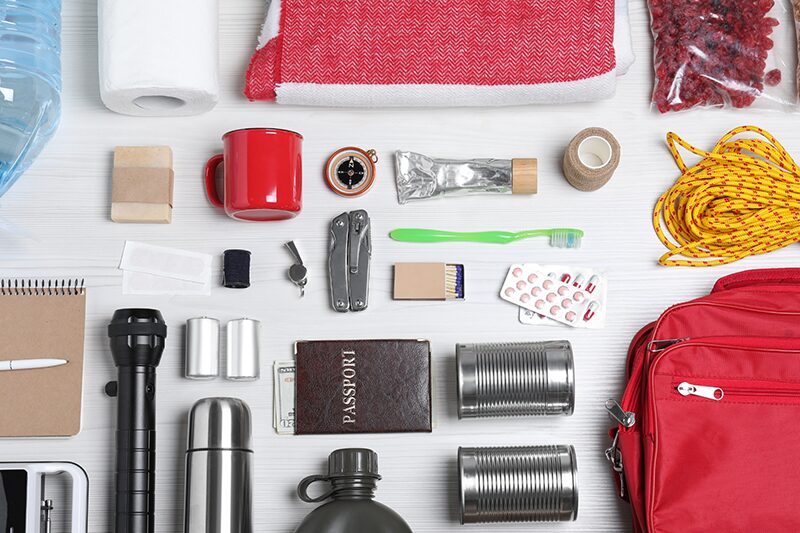
Whether you call it a bug out bag, a survival kit, or an emergency go-bag, the idea is simple: be ready when life suddenly stops cooperating. Accidents and disasters happen, which makes, as humans, feel anxious. Nothing freaks us out more than realizing how little control we ultimately have over the natural world, human-made critical infrastructure, or even our own lives.
Emergency preparedness is a response to that anxiety about losing control, and it takes many forms. There are countless government agencies and private associations dedicated to mitigating disasters and minimizing the damage of emergency incidents, but many people take it into their own hands as well.
Because think about it: if a natural disaster wipes out critical infrastructure, will these agencies and associations still be able to do what they were created to do? In some cases, no. That’s why taking disaster preparedness and survival skill knowledge into your own hands can be helpful—or even life-saving.
We’ll explain what bug out bags and survival kits are, including how they differ and the likely best scenarios for each one. Spoiler alert: You should have both types of kits prepared at all times. We’ll also discuss a type of disaster management that most people overlook: Digital security.
Bug Out Bag vs Survival Kit: What’s the Difference?
The terms bug out bag, survival kit, and 72-hour kit get used interchangeably when talking about emergency preparation, but preppers know that each of these has a meaningful difference when it comes to purpose, design, and intended use.
But Out Bag
A bug out bag is a portable, pre-packed kit designed to support you if you must evacuate quickly from your home or usual environment. The idea is that you can “bug out” at a moment’s notice and sustain yourself with essentials for a short period while you reach safety. Traditionally, these bags focus on mobility and immediate survival for a 72-hour timeframe, rather than long-term wilderness endurance.
Survival Kit
A survival kit, on the other hand, generally refers to a broader set of tools and supplies that can support you for longer periods of time and in more varied environments—especially if you are sheltering in place or dealing with extended outages and isolation. The traditional concept of a survival kit extends beyond the basics; it may contain things like fire starters, knives, navigation tools, fishing kits, or seeds and tools for long-term self-sufficiency if you expect to be without services for days or weeks.
| Bug Out Bag | Survival Kit | |
| Primary Purpose | Rapid evacuation | Longer-term survival or sheltering in place |
| Portability | High (compact, backpack-ready) | Variable (can be larger/heavier) |
| Duration of Use | ~72 hours (short-term) | Days to weeks, depending on scenario |
| Typical Contents | Essentials for immediate survival (water, food, documentation, basic tools) | Broader gear (tools, extended food, advanced shelter items) |
| Common Storage | Near exits, in car, workplace | Home, vehicle, retreat, outdoor base |
It’s easier to prepare when you know what you’re potentially up against. Of course, you can’t prepare for every possible scenario, but you can have a good idea of the most common hazards and incidents that people in North America might face. The Canadian government has a list of potential hazards and emergencies to be aware of, with preparation advice for each one.
Bug Out Bag Essentials
A bug out bag should be ready to grab and go and equipped with the most critical items you’ll need to stay safe and functional for at least ~72 hours. Ready.gov, a website with emergency preparedness resources provided by the U.S. Department of Homeland Security, has a list of the critical items to include in a bug out bag or kit:
Water & Hydration
- Water (at least a few liters per person)
- Portable water filters or purification tablets
- Collapsible or hard water bottle
Food & Nutrition
- 72-hour supply of non-perishable, high-energy food (energy bars, MREs, dried meals)
- Compact utensils and a manual can opener
Clothing & Weather Protection
- Season-appropriate change of clothes
- Rain gear or poncho
- Emergency blanket or sleeping bag
Shelter & Comfort
- Lightweight tarp or emergency shelter
- Sleeping pad or blanket
- Hat, gloves, socks
First Aid & Medications
- Compact first aid kit (bandages, antiseptic, pain relievers)
- Prescription medications (enough for several days)
- Personal hygiene items (toilet paper, soap, sanitizers)
Tools & Gear
- Flashlight/headlamp + extra batteries
- Multi-tool or survival knife
- Fire-starting supplies (lighters, waterproof matches, ferro rod)
- Paracord/rope and duct tape
Navigation & Communication
- Local paper maps + compass
- Radio (battery-powered or hand-crank)
- Whistle or signaling mirror
Important Documents & Resources
- Copies of ID (passport, driver’s license) in a waterproof pouch
- Emergency contact info
- Cash in small bills
Additional Practical Items
- Spare phone charger or power bank
- Personal hygiene basics (toothbrush, wipes)
- Duct tape, zip ties, small repair items
Tips for Packing
- Prioritize lightweight and multipurpose items so the bag remains portable.
- Tailor your choices to your region’s climate and common emergencies (e.g., colder weather, flooding, wildfire risks).
- Regularly review and rotate food, water, and battery-powered items to keep everything current and ready.
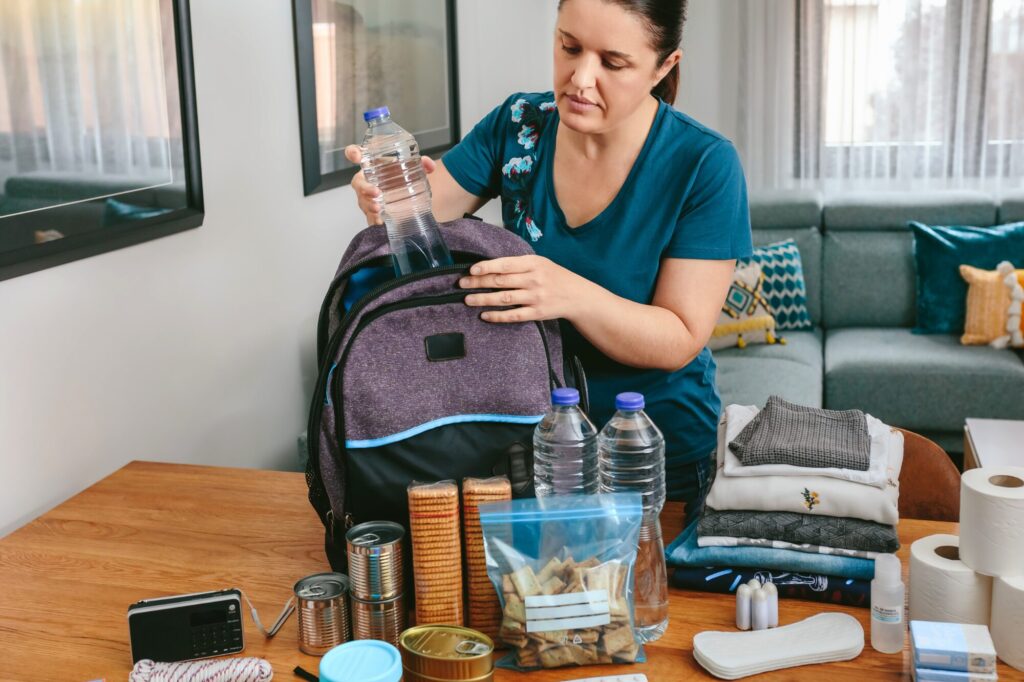
Survival Kit Essentials
Survival kits are designed more for endurance than mobility, unlike bug out bags. When you pack a survival kit, think about what you need to stay safe, healthy, and functional for days or weeks when resources are cut off.
You’ll notice there’s some overlap with the bug out bag list. That’s because both kits are geared toward emergency situations. In any scenario, whether it’s evacuating your home for a few days or surviving a prolonged power outage, you’re going to need access to potable water for example. In a bug out bag, though, you might just pack enough drinking water for a few days. In a survival kit, you might include a water filtration device.
Water & Long-Term Hydration
- Large water supply (aim for at least one gallon per person per day for drinking and sanitation)
- Water purification tools (filters, tablets) for ongoing use
- Collapsible water containers for storage and transport
Extended Food Supplies
- Non-perishable food designed to last multiple days to weeks
- Canned goods, dried staples, freeze-dried meals
- Manual can opener if needed
- Protein bars, nuts, comfort food to maintain morale
First Aid & Health Supplies
- Comprehensive first aid kit with bandages, antiseptics, and trauma supplies
- Prescription medications stocked for several days
- Hygiene and sanitation items (soap, toothbrush, wipes, feminine products)
Lighting & Power
- Multiple flashlights and lanterns with extra batteries
- Battery-powered or hand-crank radio for weather updates and alerts
- Portable power bank or power station for essential electronics
Shelter, Warmth & Comfort
- Blankets or sleeping bags appropriate for your climate
- Heavy-duty tarp, rope, and tools to reinforce shelter or weather-proof your space
- Extra seasonal clothing and sturdy footwear
Tools & Repair Equipment
- Multi-purpose tools, hammer, nails, duct tape, rope/cordage
- Work gloves and protective gear
Communication & Information
- NOAA weather radio or battery/hand-crank radio for alerts
- Printed local maps and written emergency plans
- Emergency contact list (paper) and a whistle or signal mirror
Important Documents & Financial Preparedness
- Waterproof copies of IDs, insurance policies, and key legal documents
- Cash reserves in small bills (ATMs and card machines may not work)
- Photos of family members and pets for identification if separated
Sanitation & Hygiene
- Toilet paper and trash bags for waste containment
- Disinfectants and cleaning supplies
- Masks and gloves for infection control in crowded or compromised spaces
Prepping for Tuesday and Doomsday
When it comes to preparedness, it helps to think on a spectrum of emergencies rather than a single “worst-case” scenario. On one end is what many preppers call “Tuesday” disasters—the everyday emergencies that can disrupt normal life in very real ways, like a house fire, local flood, extended power outage, or sudden need to evacuate due to natural disaster alerts.
On the other end of the spectrum are longer-duration scenarios, what some might call “doomsday” or extended disaster events, where staying put for days to weeks becomes just as important as evacuating.
Together, these two kits address different phases and types of crises. The bug out bag equips you for rapid response and the survival kit equips you for endurance and adaptability. By preparing both, you’re giving yourself and your family the options you’ll need when facing a crisis.

Digital Preparedness: The Missing Piece of Most Emergency Plans
Emergencies don’t just disrupt power and roads; they can sever access to your accounts, destroy data stored only on damaged devices, and expose you to scams or identity theft just when you’re most vulnerable.
Just as you would build a survival kit full of extra food, water, and supplies, you should also create a digital survival kit. Here’s how.
Digital Survival Kit: The Essentials
Your digital survival kit should have these basic elements:
- Digital copies of important documents (IDs, passports, insurance, medical records)
- Encrypted backups of personal data and photos
- Offline access credentials for critical accounts
- Portable encrypted storage devices (USB/SSD)
- Secure password manager with exportable vault
- Multiple redundant backups of your data
- Backups on different media types (e.g., internal drive, external SSD, cloud)
- At least one offsite copy, ideally in the cloud or stored securely with a friend or family member
- Offline copies of manuals, emergency contacts, and instructions
- Secure backups of critical authentication keys and recovery codes
A widely recommended approach in data security is the 3-2-1 backup rule: keep three copies of your most important personal data, on two different types of media, with one copy stored offsite.
Digital Hygiene and Resilience
You should also embrace basic cybersecurity practices on a daily basis to keep your data safe:
- Keeping software and operating systems up to date
- Using strong, unique passwords and a password manager
- Enabling multi-factor authentication (MFA) wherever possible
- Being cautious with links, attachments, and messages during crises
- Protecting your home network with strong Wi-Fi security and encryption
Being Prepared Means Having Options
The truth about emergencies is simple: they happen, and often without warning. Having both a bug out bag and a survival kit means you’re ready for a range of scenarios. You can move quickly when you must, or sustain yourself when you’re dealing with a prolonged situation.
In addition, your data, access to accounts, communications, and digital identity are as critical to protect as your physical safety. Secure backups, encrypted storage, and recovery tools reduce vulnerability and ensure that losing a device or facing a cyber incident doesn’t become a second disaster.
When you’re prepared for a crisis, you feel confident and capable, rather than afraid. So when the unexpected happens, you have the tools and mindset to respond effectively—and that’s really what it’s all about.