When First Republic Bank of San Francisco failed in early May, 2023, it was less than two months after the failures of both Silicon Valley Bank and Signature Bank.
These newsworthy failures are the first banks to fail since 2020. Additionally, according to the FDIC, there have been 566 bank failures since 2000.
Although Signature Bank failed because of poor management, Silicon Valley Bank and First Republic Bank both failed because of what is called a “bank run.”
And in the aftermath of bank runs and bank failures, scammers are ready to strike.
Let’s talk about what these failures are and how to avoid scammers who may try to take advantage of the news of a bank failure to prey on unsuspecting targets.
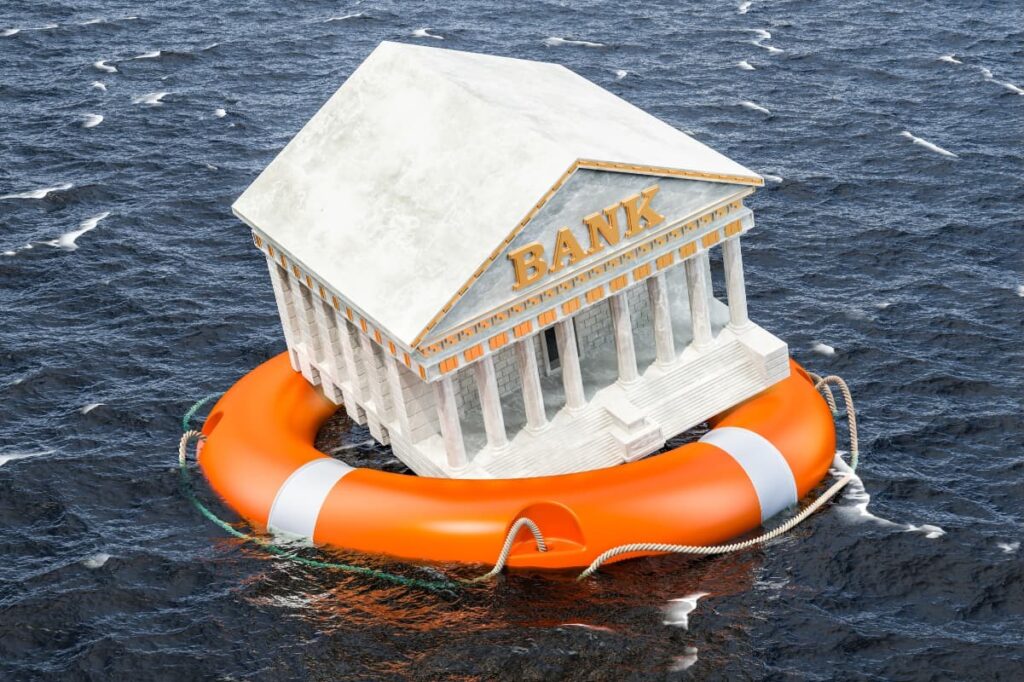
What is a Bank Failure?
Banks fail because they have become insolvent.
Insolvency means there aren’t enough available funds to cover both customer deposits and any funds that they owe to other entities.
In the case of SVB and Signature Bank, the FDIC chose to cover all deposits, including both insured and uninsured deposits.
A bank is listed as a failed bank if the FDIC (or another state regulatory agency) steps in and closes it. At this point, the bank’s assets go into receivership and the bank’s debts are resolved.. For both SVB and Signature, the FDIC serves as the bank’s court-appointed receiver.
In the case of First Republic Bank, JP Morgan stepped in and purchased most of the collapsed bank, automatically converting all First Republic deposits into Chase accounts.
Typically, the FDIC’s deposit insurance coverage caps at $250,000 per depositor. (That’s per bank and per ownership category.
What is a Bank Run?
A bank run is one of the unfortunate potential consequences of a bank failure. Both SVB and First Republic’s failures are the result of a bank run.
A bank run occurs when a bank’s customers withdraw their deposits in a short time frame, due to fears about potential insolvency.
A bank run is basically a vicious cycle:
- The more withdrawals, the higher the probability of default occurring.
- The more likely a default becomes, the more likely people are to withdraw their money from the bank.
- That, in turn, causes more uncertainty–and brings the bank closer to a bank run.
If this cycle gets to a point where the bank doesn’t have enough reserves to cover the withdrawals, then we have an insolvency issue–and a bank failure.
Here’s what to remember about the differences between bank run and a bank failure: a bank run may or may not cause a bank failure, and a bank failure is only sometimes caused by a bank run.

How Do Scammers Take Advantage of Bank Failures?
It’s an unfortunate fact that scammers have realized that bank failures provide them with a great opportunity to con people out of their money.
Here’s how it works:
Scammers know that everyday people have common anxieties about their money. When banks are failing, people are concerned about their investments, deposits, and savings–even if their money isn’t in one of the banks that has failed.
Scammers call innocent victims and prey on those fears. They prompt the person on the phone to transfer their money from a protected and valid bank account to a phony bank account that belongs to the scammer.
They may have them wire the money, too. All of this is done under the threat that if they don’t do something right now, they are going to lose all their money.
They are often successful because they are able to convince people that they are there to help–and that their money is in jeopardy if the caller’s guidance is ignored.
How to avoid bank failure scams
The good news is that it is possible to avoid these scams altogether. You don’t have to be incredibly savvy to avoid being scammed by a bank failure hoax, but you do have to take a few precautionary steps.
- Don’t click on unsolicited messages from your bank that ask you to update your account or verify your information.
- Remember that your bank will never call you and ask you for your personal information. When you call your bank, the representative may ask you for information to confirm your identity–but that doesn’t go the other way. Your bank will NOT ask you for this information when calling you.
- Do not send funds to any account unless you can confirm that the destination is a legitimate destination.
- If the caller uses aggressive, pushy, threatening, or even urgent language, that is a huge red flag that you are talking to a scammer.
- Double-check all of the contact information from the caller and your bank. Ideally, you will hang up and call your bank, using the number on your bank statement, the bank’s website, or even your debit card with the bank. Do not use any number provided by the caller.
What to say to a potential scammer
Although the best thing to do is to just hang up and call your bank, here are some things you can say if you suspect a caller of being someone with bad intentions.
- “No.” Then just hang up! In fact, you don’t even need to say the “no” part if you want to just hang up.
- “Can you identify my most recent transactions?” If they can’t, you’ve got a scammer on your hands.
- “I’m going to call my bank directly.” If they resist this idea, they are a scammer!
What to Do If Someone Tries to Scam You–Or If They Were Successful
If you have been the victim of a successful or attempted scam, don’t panic. The situation may be serious, but there are steps you can take to address the problem right away.
Stop responding and block the scammer
Your first step is to STOP communicating with the scammer.
That means that you should not respond to any calls, messages, or emails from the spammer. In fact, after you record their information, you should block them from being able to contact you.
Some scammers only commit their fraud once, but others come back for more. Don’t give them the chance!
If you have not sent any money, that’s great. If you did use money, make sure you don’t send any more, even if they try to threaten you. Sometimes, scammers will threaten you with police action, jail time, lawsuits, immigration violations, and more. Remember that these are ALL false.
Report the scam to your bank
Contact your bank right away, regardless of whether or not you sent money to the scammer.
If you made a debit or credit card payment, call the number on the back of your card to report the fraud. It’s possible they will reverse the charge and return your money. They will cancel your credit or debit card to prevent the scammer from being able to use it in the future.
If you paid with your bank account, call your bank directly and inform them of the fraud. You will need to have them flag the transaction as fraudulent, and you can ask them to reverse the charge.
If you sent a wire transfer, contact your bank immediately and have them report the wire as fraudulent. As with the other reports, you will want to ask your bank to reverse the transfer and return your money.
If you did not make a payment, but someone was impersonating a representative from your bank, contact the bank and request to speak to the fraud department.
Take actions to protect yourself and your accounts
There are several actions you can take to protect your accounts from further scams and fraudulent activities.
- Save all of the records of your conversations with the scammer, including screenshots, emails, and phone records
- Change all of your passwords.
- Request a credit freeze to protect the scammer from using your information to open credit cards or commit identity theft
- When you need to unfreeze your credit, sign up for a credit alert program that includes fraud notifications.
- Monitor all of your accounts for suspicious activity.
- If you were scammed and lost money, be sure to file a police report. Sometimes, you can’t get your refund unless you take this important step.
- If the scammer gained access to your social security number, report the scam to the Social Security Administration.
Unfortunately, banks will continue to fail, and scammers will continue to take advantage of these difficult circumstances to steal money from unsuspecting victims.
Protect yourself from these scams by paying attention to the signs that a caller is fraudulent. If you do fall victim to one of these scams, take action right away to try to get your money back and prevent the scammers from keeping your hard-earned money!